Subterranean termites require constant access to soil moisture to survive, constructing earthen shelter tubes over foundation footers to reach structural wood framing. In riverside areas such as the High Street…
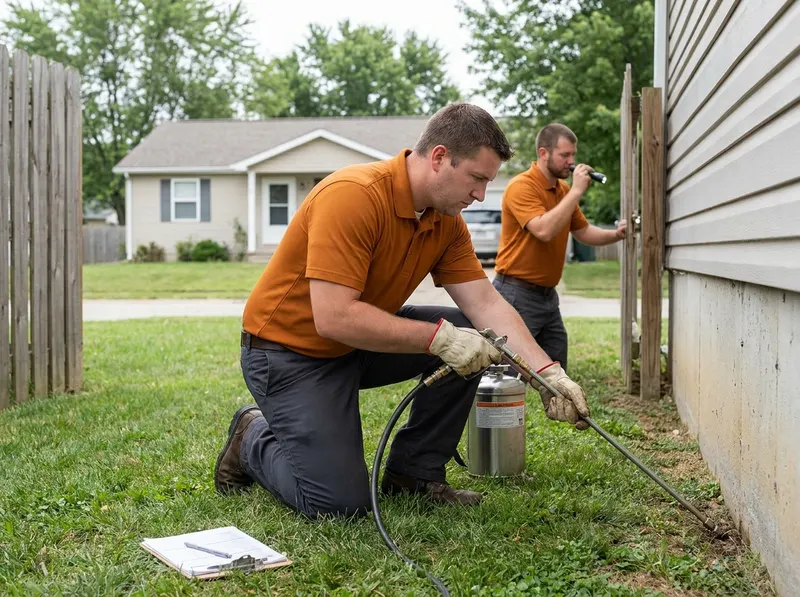
Subterranean termites require constant access to soil moisture to survive, constructing earthen shelter tubes over foundation footers to reach structural wood framing. In riverside areas such as the High Street Riverfront District and low-lying ground around the Tanners Creek Area, sustained ground moisture creates ideal conditions for subterranean colony expansion. A direct subterranean barrier treatment isolates the structure from ground-nesting workers, solving the root cause rather than relying on surface sprays that leave hidden timber galleries unprotected.
Older residential properties in the Downtown Historic District and along the Bielby Road Corridor often feature stone masonry or unsealed crawlspaces that provide concealed entry points for foraging insects. Technicians apply non-repellent termiticides directly into perimeter soil trenches or install exterior monitoring stations along property perimeters in neighborhoods like Ridgeview, Walnut Ridge, and Ludlow Hill. This approach provides rapid pest defense without pushing customers into restrictive multi-year service contracts.
Termiticide formulations bind directly to soil particles around foundation footings, preventing migration into surrounding turf or indoor living spaces. For properties along the Hidden Valley Lake Border or near the Oxbow Nature Conservancy, strategic bait systems offer a low-impact method to monitor and collapse subterranean colonies. All project requirements and exact footage measurements are evaluated and confirmed on-site before treatment begins.
Every job gets a firm, written price after a free on-site visit.
Tell us about your subterranean termite treatment & inspection job in Lawrenceburg and we'll send a clear, written quote — usually the same day.
 Everyday Pest Solutions